
I Thought I Knew
August 1, 2024
Steps of Change
March 16, 2026
In the military, demotion typically follows a court-martial or formal process that clearly states the reason for the action. Recently, however, an administrative decision made without stated cause stripped nursing and education of their professional status, a move that may have unexpected and lasting consequences for our society.
I ask why? Weren’t we just celebrating them as heroes of the pandemic? What happened?
Some say the decision made by the US Department of Education is more about student loans and the cap on the amount of money that can be borrowed for education. While that may be the logic behind an arbitrary decision, there is a bigger question involved than just tuition money; It centers on what it is to be a professional.
When decisions appear that seem to lack heart, I stop to question what is behind it. And while I don’t consider myself to be a conspiracy theorist, I can’t help but wonder what part, if any, AI played in this decision about some of the foundational elements of culture.
In an AI-driven world, education and nursing remain the most deeply human professions, shaping who we are as members of a thoughtful, caring society.
In his classic book, Doctors, Lawyers, Ministers: Christian Ethics in Professional Practice, Dennis M. Campbell defines what it is to be a not just a working person but one considered to be a professional. His focus was on traditional professional fields, and it could be argued that based on his description, other fields like law enforcement could be included in this designation as well.
Ultimately, the work of a professional is not simply a job description but a personal commitment to a life of service. Campbell wrote, “As institutions of a complex and rapidly changing society, it should not surprise us that professions reflect, even as they are called, to give guidance to, the society.”
These are characteristics of what has become to be considered professional according to Campbell in his book:
- Engaged in a social service that is essential and unique, readily identifiable and cannot be provided by one outside the profession.
- The professional has developed a high degree of knowledge which has been acquired through intellectual skills of a high order.
- The professional must develop the ability to apply the special body of knowledge that is unique to the profession and are able to apply them in a way useful to society.
- The professional is part of a group that is autonomous and claims the right to regulate itself. The individual must show knowledge and competence in their particular field as well as application.
- The professional recognizes and affirms a code of ethics which defines ethical practice.
- The professional exhibits a strong self-discipline and accepts personal responsibility for actions and decisions through years of preparation.
- The professional’s primary concern and commitment is to communal interest rather than merely to the self. That means self-interest is set for the greater good of the entire society.
- More concerned with services rendered that with financial rewards. Professionals do not ‘work for wages.’ Money is not the reason they offer their services but often it is a response to a “call” to serve. (Campbell, 1982)
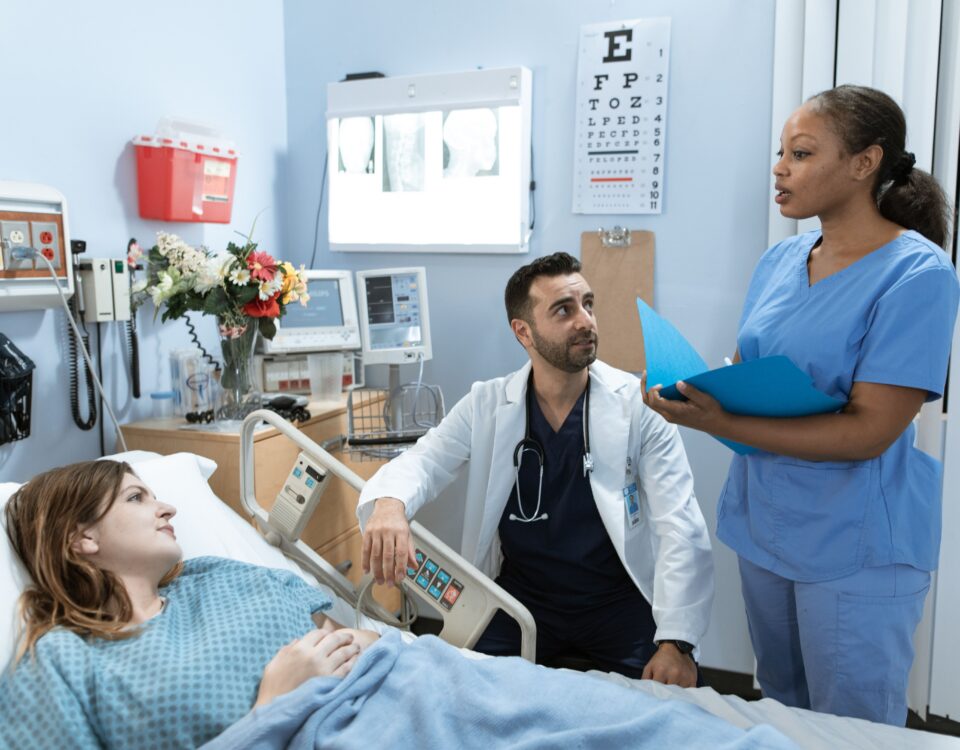
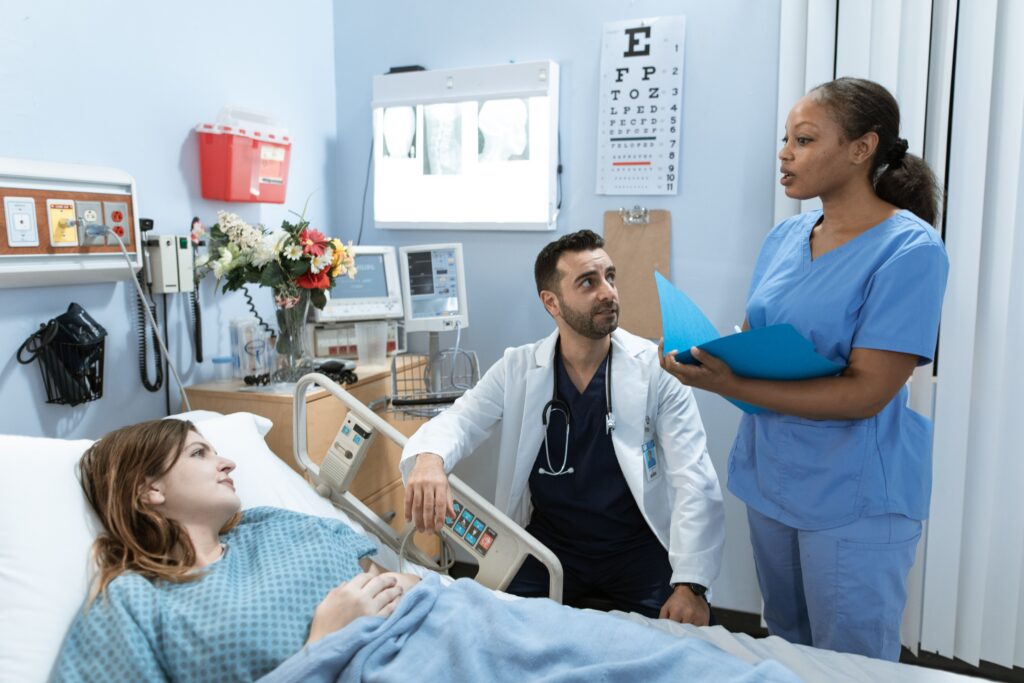
Both systems, nursing and education, are professions that not only reflect who we are but who we are becoming through direct human contact. Teachers shape our future through shepherding our children. Nurses guide us through pains of the present. These professions require what cannot be provided through artificial intelligence and that is the heart-to-heart expression of compassion.
What algorithm lies behind the scheme to demote the profession of nursing to that of a 9-5 job? What algorithm determines that those who have direct impact on our lives should be viewed as “less than?”
Ultimately, it’s not about money, it’s about respect for oneself and for one’s profession. For the individual, often the motivation is a call to service. My favorite question to ask a nurse is “how did you come to be a nurse?” Very often the individual says, “I knew all along,” citing caring for family members from very early on. It’s these stories that weave a path toward a life of service.
No administrative ruling can erase the lived reality of a calling. Professionalism is not granted by a department, it is earned through service, sacrifice, and responsibility to others. Nurses and educators live this truth every day, often without recognition and despite systemic disregard.
When I hugged my friend, who is a nurse, and told her she would always be a professional in my eyes, I realized something: the truest measure of professionalism is not defined on paper but held in the hearts of those who serve and those whose lives they touch.